


Is it time to examine some of our long-standing phraseology and place some of the Episco-patter on the shelf?
I think so.
 Like most liturgical churches, the Episcopal church has amassed a lexicon of terms to describe our various theological foundations, rites, rituals, polity, locations, and the armamentarium of vestments and sacred vessels which help make it all possible. While this creates our own Starbucks-like language, this common nomenclature links today’s church to the past and to our fellow Anglicans across the globe who use the same terminology in the worship setting. Some refer to the length debates over the importance of the proper use of said items as “adiaphora,” a remarkable concept defined by Richard Hooker. Episco-patter is not adiaphora.
At the other end of the spectrum rests a cache of familiar various words, phrases, and anecdotes we have collected over the years. Once considered “cute” or “clever” turns of phrase, these old relics have suffered from overexposure and the passage of time to become old chestnuts and “dad jokes.” I refer to it as Episco-patter.
Episco-patter
noun | Epis·co·pat·ter | \ i-ˌpi-skə-ˈpa-tər \
: a joke, special language, or jargon of the Episcopal Church that has become tedious because of its age and constant repetition.
Overexposure to Episco-patter holds certain risks. One’s eyes may become stuck in your head due to excessive eye rolling (though there is the benefit of actually seeing your brain). Most importantly, several examples of Episco-patter possess the capacity of inflicting real harm upon the church. And with that as a lead in, I present the case of that oft-mentioned off-the-cuff descriptor of the Episcopal Church:
Catholic Lite.
I belong to a number of Episcopal-based social media groups, one of which I am an Admin. On a weekly basis, someone exploring their faith questions the group about how the Episcopal Church differs from denomination – particularly the Roman Catholic Church. Valid question and usually a source of fantastic conversation! Invariably. someone “cleverly” posts the “We’re Catholic Lite!” response, which I believe was popularized by a quote from the late, great Robin Williams.

There’s a lot to unpack here.
First, and this is a nit, we are not Episcopals. We are Episcopalians. Episcopal is an adjective and Episcopalian is a noun, as in the sentence: Episcopalians are members of the Episcopal Church. Many tears have been shed as the result of using Episcopal where one should use Episcopalian, or vice versa. And that will be the subject of an upcoming blog post.

Episcopalians and Catholics are nearly-identical cousins. We laugh alike. We walk alike. Sometimes, we even talk alike.
Second, while the Episcopal and Roman Catholic churches share a number of similarities, we are not the same. A number of differences in theology, liturgy, and polity exist between the two Christian sects. On the surface, Episcopal and Roman Catholic Masses seem nearly identical, so much so that Episcopalians and Catholics can attend each others services comfortably. However, dramatic differences define each denomination, including (but not limited to) the theology of the Eucharist and who should receive it, the ordination of women and openly LGBTQI+ clergy, opinions on divorce and birth control, etc. Either denomination represents a viable and well-trod spiritual path, but they are not interchangeable. They are not the same.
 Finally, the whole idea of the Episcopal Church being Catholic Lite just rubs me the wrong way. Now, I understand Robin Williams’s use of “lite” satirizes the Miller Lite commercials. Contrary to how this all sounds, I enjoy humor, particularly irreverent humor. As a recovering (Byzantine) Catholic, I felt no guilt at all when I first heard this. About 20 years ago.
In addition to the age of the joke, “lite” carries quite a bit of baggage which we should consider. In the advertising industry, food and beverage manufacturers append “lite” or “light” to their brands to denote a product containing fewer calories, less fat, no added sugars, etc. They have created the association in our minds that “lite” means “less of” or “less than” something. And, be honest, do the “lite” products satisfy us as much as the regular version of the product? Or do they represent something you “have to eat or drink” because it is “good for you”?
These associations have influenced the definitions ascribed to “lite” in the modern lexicon. As defined by Merriam-Webster, “lite” refers to “diminished or lacking in substance or seriousness (lite news); specifically being an innocuous or unthreatening version. ‘it was film noir lite’.” According to the Cambridge Dictionary, “lite” is “used for describing things that are not serious and that are easy to understand and enjoy: lite news about celebrities OR [after noun] humorous or disapproving; not as serious or as good quality as the real thing: She described their relationship as ‘marriage lite’.” Oxford Dictionaries offers a similar definition: “Denoting a simpler or less challenging version of a particular thing or person. ‘the film was dismissed by many of the more serious critics as Woody Allen lite’,” as does Dictionary.com: “noting a version that is comparatively less extreme, profound, advanced, etc., than the typical version: The film glossed over the dangers of the experiment with a science-lite explanation. The lite version of the app is available for mobile download.”
Words have meaning. I am a marketer by trade with over 20 years experience in practicing in the corporate world and teaching at the college level. Consumer behavior and branding studies indicated repeated exposures equating two concepts with one another (e.g., “Catholic Lite” and the Episcopal Church) strengthens the associations between them. Do we want to create or, worse, reinforce the idea that the Episcopal Church is “less than” the Roman Catholic Church? Less profound? Not as serious? Scaled down? Lower quality? Because, honestly, that is what Catholic Lite is doing.
Now, I know what your thinking. In the Robin Williams joke, he defines the “less than” in the proposition: less guilt. He does, but the entire quote is rarely provided as the explanation of the Episcopal Church or how we are different from the Roman Catholic Church. Instead, people usually comment with “Catholic Lite” which creates the “less than” associations described above. If the commentator provides the entire quote, we run into problems of misrepresentation. We are not the same in that our only difference is the presence (or lack) or guilt. In other instances, people shortcut the situation: “We’re Catholic Lite! No (or less) guilt!” While that offers some demarcation between the two denominations, we define our own sect at the expense of another. It’s pithy (and a bit true), not not very Christ-like.
You’re also thinking, “You’re crazy! ‘Catholic Lite’ isn’t hurting us. Have a sense of humor!” Well, it certainly isn’t helping us either. When people want to learn about your denomination and what is has to offer, i can bet you dollars to doughnuts they aren’t expecting a punchline – or a tagline. They want substance, not “less than.” And, unlike the “lite” connotations of “simple” and “easy to understand,” the Episcopal Church is every bit as complex as any other Christian religion.
So what should we do when confronted with “Catholic Lite”?
Think via media. The Episcopal Church represents the middle way between the Catholic and Reformation churches. Are we Catholic? Protestant? The answer is a resounding YES! Our Book of Common Prayer contains numerous examples of how elements of the Catholic Church and Protestant Reformation exist in our liturgy and theology. And maybe that’s our response to claims of being “Catholic Lite” – we’re more like “Catholic Reformed.”
So. let’s bid a farewell to “Catholic Lite”…
Give rest to Catholic Lite and may it dwell eternally with the rest of the Epsico-patter…


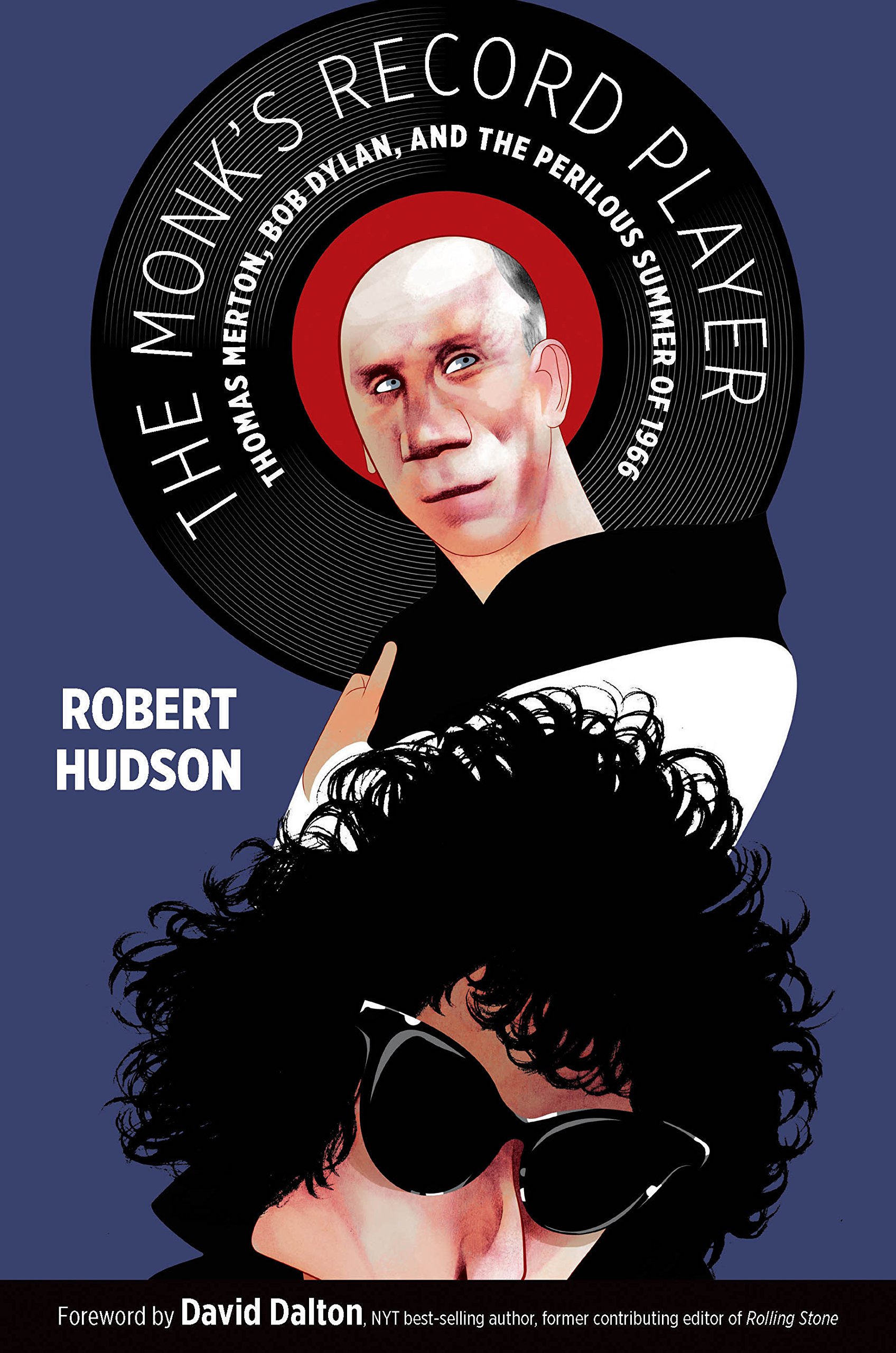 The book’s popularity astounded everyone, requiring multiple orders of additional books to accommodate the demand. Was it the draw of the prolific Trappist monk? The equally prolific folk/rock icon? An interest in the time period?

 Findings by other research providers corroborate Pew’s contention of declining church membership and attendance. In Gallup’s
 Birds on Sticks